- "Maintaining a Proud Tradition of Excellence since 1885"
- 973.664.0250
- info@sanitaryconstruction.com


NJ Wastewater System Installation: What Municipal Engineers Need to Know
February 13, 2026Stormwater Management Compliance in NJ: MS4, NJPDES, and What Contractors Are Required to Do
April 6, 2026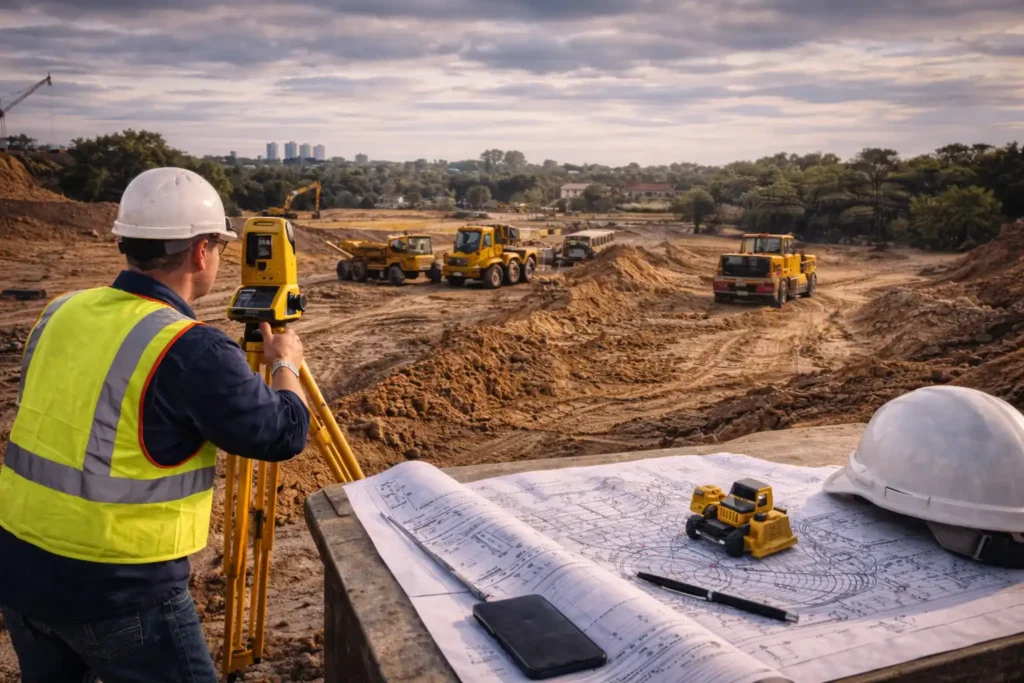
Earthwork is the foundation of every site development project — and it is routinely the phase where projects get into trouble. Inaccurate cut-fill analysis, underestimated rock volumes, inadequate erosion controls, and poor coordination with utility installation can turn a straightforward grading operation into a costly, schedule-busting problem.
In New Jersey, where soil conditions vary dramatically across a relatively small geographic area and NJDEP environmental regulations add compliance requirements to nearly every grading operation, planning for earthwork requires both technical rigor and local experience. This article outlines the key considerations for developers and project managers planning mass grading and earthwork in New Jersey.
Understanding NJ Soil Conditions by Region
New Jersey’s geology divides the state into distinct regions with significantly different soil and subsurface conditions, each presenting unique challenges for earthwork contractors:
- Northern NJ Highlands: Bedrock is shallow — often encountered within one to three feet of the surface. Rock blasting or rock breaking is frequently required, and rock disposal or on-site processing must be planned and budgeted.
- Piedmont Region (Morris, Somerset, Hunterdon, Passaic): Variable soils with intermixed clay, silt, and granular material. Seasonal wet conditions limit working days and can compromise subgrade stability.
- Inner Coastal Plain (Middlesex, Mercer, Burlington): Predominantly sandy soils with high permeability. Excellent for drainage but may require stabilization for haul roads and working platforms.
- Outer Coastal Plain (Ocean, Atlantic, Cape May): Fine sands and organic soils. Low bearing capacity and high groundwater make earthwork challenging and often require specialized ground improvement techniques.
A competent earthwork contractor operating in NJ will have direct experience with conditions in your specific region and will be able to identify subsurface risks early in the project — before they become change orders.
NJDEP Soil Erosion and Sediment Control Requirements
Any earth disturbance in New Jersey exceeding one acre requires a Soil Erosion and Sediment Control (SESC) plan approved by the applicable County Soil Conservation District. Projects disturbing five acres or more also require NJPDES construction general permit coverage (NJG0088323), which mandates a Stormwater Pollution Prevention Plan (SWPPP) and compliance with NJDEP’s standards.
Earthwork contractors operating in NJ must be familiar with the state’s Standard for Soil Erosion and Sediment Control, which governs the design and installation of perimeter controls, stabilized construction entrances, sediment basins, and inlet protection. Violations carry significant penalties and can result in stop-work orders that halt entire projects.
Cut-Fill Analysis and Mass Haul Planning
Effective mass grading begins with a rigorous cut-fill analysis — a calculation of earthwork quantities that determines whether the site generates surplus material (cut) or requires imported fill. A balanced earthwork plan minimizes both on-site stockpiling and off-site hauling, reducing cost and schedule risk.
Mass haul planning — the sequencing of cut and fill operations to minimize the distance material travels across the site — is an equally important element of earthwork efficiency. An experienced contractor will review the grading plan and develop a haul plan that sequences operations to keep material moving productively and minimize the need for re-handling.
In New Jersey, the disposal of excess cut material is subject to regulatory requirements. Clean granular fill may be reused on-site or at approved off-site locations. Material with elevated contaminant levels must be characterized through soil testing and disposed of at appropriately licensed facilities.
Coordination with Utility Installation
Mass grading and underground utility installation are closely interrelated. Utilities need to be installed to their design elevations before final grading can be completed, which means earthwork and utility crews are often working in close proximity, and sometimes in direct sequence with each other.
Contractors who self-perform both earthwork and utility installation have a significant advantage here. When a single organization controls both scopes, scheduling conflicts are resolved internally rather than through cumbersome inter-contractor coordination. Work zones can be sequenced efficiently, and grade changes can be communicated and implemented without formal change order processes between separate entities.
Subgrade Preparation and Structural Fill Requirements
The quality of subgrade preparation directly determines the performance of pavements, structures, and utilities installed above it. In New Jersey, subgrade requirements for roadways, parking areas, and building pads are governed by the project’s geotechnical report and the applicable design standards — NJDOT Standard Specifications for public roads, local municipal standards, or developer-specific specifications for private sites.
Structural fill compaction is typically required to 95 percent of maximum dry density per ASTM D698 (standard Proctor), with testing frequencies specified in the geotechnical report. Contractors should have a clear process for coordinating compaction testing with the project’s geotechnical engineer and for addressing failing tests without delaying the grading schedule.
Conclusion
Successful earthwork in New Jersey requires more than equipment and operators. It requires regional soil knowledge, regulatory fluency, disciplined mass haul management, and seamless coordination with utility installation. Developers who select earthwork contractors based on these qualifications — rather than on price alone — consistently achieve better project outcomes and fewer surprises.
Ready to discuss your project? Contact Sanitary Construction Company at (973) 664-0250 or info@sanitaryconstruction.com. Visit us at sanitaryconstruction.com.